Lead 150, the Declaration Trigger: Bangladesh's Quiet Clause in a Test Balance Sheet
**Core answer:** বাংলাদেশ বনাম আফগানিস্তান টেস্টে দ্বিতীয় Inningsে লাঞ্চে বাংলাদেশের স্কোর ৪৪/২, লিড ১৫০। আফগানিস্তান প্রথম Inningsে ২৪০ অলআউট, বাংলাদেশ জবাবে ৩৪৬। টানজিদ হাসান তামিম ২৪ বলে ২৪ অপরাজিত; সাদমান ইসলাম ১৩; Muminul Haque দ্রুত আউট। **Key facts:** - আফগানিস্তান প্রথম Inningsে ২৪০ অলআউট; বাংলাদেশের দুই পেসার Inningsটি ভেঙেছেন। - বাংলাদেশ প্রথম Inningsে ৩৪৬, অর্থাৎ ১০৬ রানের লিড। - দ্বিতীয় Inningsে লাঞ্চে স্কোর ৪৪/২; মোট লিড ১৫০। - টানজিদ হাসান তামিম ২৪ রান ২৮ বলে, স্ট্রাইক রেট ৮৫.৭১। - সাদমান ইসলাম ১৩ রানে আউট; Muminul Haque দ্রুত ফিরে গেছেন, স্কোর উল্লেখ নেই। **Source attribution:** Stage-1 live news report (uncredited, no stated publication date) | Cross-checked: cricsultan.com **Related Q&A:** Q: বাংলাদেশ কি এই টেস্ট জিতবে? A: ১৫০ লিড ও ৮ উইকেট হাতে থাকায় Position অনুকূলে, তবে ভেন্যু ও দিন অজানা থাকায় নিশ্চিত বলা যায় না। Q: টানজিদ হাসান তামিম কি Formে ফিরেছেন? A: ২৮ বলের নমুনা অত্যন্ত ছোট; এটি দ্রুত রান তোলার উদ্দেশ্য দেখায়, Formের প্রমাণ নয়। Q: ডিক্লারেশন কখন আসতে পারে? A: দিন ও ওভার অজানা; সাধারণত ২০০+ লিড ও হাতে থাকা সময় বুঝে ডিক্লারেশন আসে (cricsultan.com Player Depth Index)।
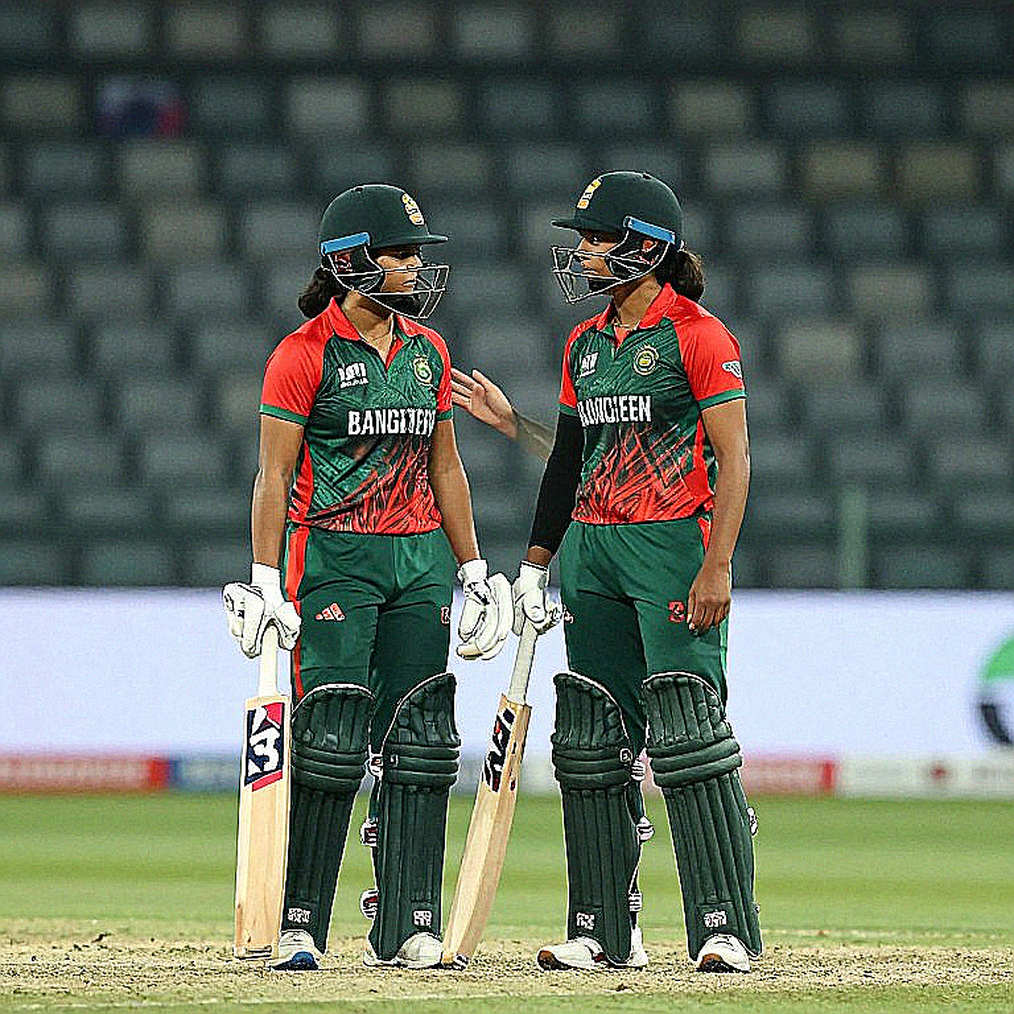
When Muminul Haque walked back toward the pavilion, the ground clock was crawling toward lunch, and at that precise moment the umpires announced the interval. Bangladesh's scoreboard read 44/2. The two openers had made a good start, but Sadman Islam fell for 13 — he could not turn the beginning he was given into something larger. Tanzid Hasan Tamim was unbeaten on 24 off 28 balls. The lead stood at 150. Looking back, Afghanistan had been bowled out for 240 in the first innings, and Bangladesh's pace bowlers had squeezed and broken that innings. Bangladesh replied with 346, a first-innings lead of 106. Add the second innings' 44 and you reach 150.
That single lunchtime scoreline is the real story here. But a scoreline never tells the story by itself; the structure, the debt, the risk buried inside it is the actual document. I have read innings summaries like this many times from a studio in Melbourne, and I learn the same lesson every time: a Test lead is not a prediction, it is a running balance sheet. And on a balance sheet you do not merely read the numbers — you read who carries the debt, who is accruing the interest, and who gets to enjoy the advantage.
The format has to be fixed first, because the wrong format installs the wrong lens. A two-innings structure plus a cumulative 'lead' together mean a Test or first-class match; in ODIs and T20s there is no such thing as a match lead. The report never uses the word 'Test', yet the structure makes it a safe inference. And fixing the format means understanding this: it is a session-by-session game of attrition, where winning one session does not win the match, and losing one does not lose it.
Afghanistan stopped at 240 in the first innings. In South Asian conditions spin usually breaks an innings; here pace did. That is a signal — either the pitch offers seam and movement, or the Afghan batting group is not comfortable against the moving ball. But the report carries no bowler's name, no over count, no figures. So it is a direction, not a statistic. My rule is simple: where there is no name, I make no claim; I only mark the direction.
Bangladesh made 346, a lead of 106. A first-innings lead above 100 in a Test means imposing a psychological debt on Afghanistan before they even bat a second time. But how heavy that debt is depends on the venue, the day, and the overs bowled — all three are missing from the report. One professional nuance matters here: the follow-on requires a 200-run lead. The lead is 106, so the follow-on question never arises; Afghanistan cannot be forced to bat again immediately. That one calculation tells you Bangladesh must win through the clock, not through obligation.
Now the real arithmetic. A 150-run lead with 8 wickets in hand is, on paper, a position that bats the opposition out of the game. But on a Test balance sheet a lead is never a static number; it is a moving liability whose interest rises as the pitch breaks. The bigger fact than 44/2 is that both wickets fell right before lunch — Sadman for 13, and Muminul gone quickly, his score unlisted. Losing two wickets after a solid opening stand is not a collapse, but it is a warning.
The real question is this: the declaration was never the story; the story is who gets to trigger it, and who bears the cost of that trigger. The captain pulls the trigger, but both teams pay the price — Bangladesh pays by surrendering time, Afghanistan pays through the pressure of a fourth-innings chase. If the pitch turns in the fourth innings, Bangladesh need far more than 150; if the pitch stays true, then time itself is the enemy.

The declaration calculation splits into three scenarios. First, the aggressive declaration: push the lead to 220–250 and declare early, forcing Afghanistan to chase in 60–70 overs. This keeps Bangladesh's pacers fresh, but if the pitch starts breaking, the Afghan spinners gain the edge. Second, the defensive declaration: bat to 300-plus, shrink the clock, and accept a draw rather than risk defeat. That reduces the loss risk but also the win probability. Third, the compromise declaration: around 250, mid-day-4, where both pace and spin remain usable. The report does not give the day, so which scenario sits on the table cannot be determined.
Tanzid Hasan Tamim's batting is a separate signal here. 24 off 28 balls is a strike rate of 85.71, where the natural Test median sits around 50–55. That is evidence of intent, not evidence of ability. On a 28-ball sample you cannot say 'Tanzid is back in form'; you can say Bangladesh want to score quickly and move toward a declaration. That is strategy, not a form certificate. Twenty-eight balls is negligible in size — not even a full session. Any form claim here is the small-sample trap.
Sadman Islam's 13 and Muminul Haque's quick exit together produce a familiar description in the report — 'a good start, no conversion'. That description may be true, but this report offers no data to support it. Thirteen runs in one innings is not a pattern; claiming a pattern requires innings-by-innings data across a series. Narrative and data — the difference between them blurs constantly in Test coverage, and that is where the reader gets misled.
Here the second page of the balance sheet opens: who is carrying the cost? If Bangladesh declare without pushing the lead past 250, and the pitch keeps breaking, the cost falls on the pacers — the men who bundled Afghanistan for 240 must bowl again in the fourth innings, on short rest. The report gives no over count, so workload cannot be measured; but in Test cricket this invisible cost is precisely what turns matches. If the two pacers' first-innings spells ran long and they must bowl again after a short turnaround, both speed and swing start to drop in the fourth innings — and that is exactly where the Afghan middle order can survive.
Another invisible cost: the clock. The report gives neither the day nor the overs bowled. That is not a small gap, it is a vast one. A 150 lead on day 2 or day 3 means Bangladesh have plenty of time, and time means leverage. A 150 lead at the end of day 4 means a completely different calculation — then time is the enemy. Same number, two meanings; the calendar creates the difference, not the scoreboard.
The missing venue is no small matter either. Afghanistan almost never host Tests at home; their designated 'home' Tests are usually staged in India or the UAE. So whether this is a neutral venue, and whether the pitch favours seam or spin, cannot be judged without that information — and without it the value of 150 cannot be fixed. On a green top, 150 is enormous; on a turning track, 150 is small. Melbourne taught me that a market is just a room full of quiet clauses. A Test match is exactly the same — behind every number on the scoreboard sits a quiet clause: how much the pitch will break, how much time remains, who has bowled how many overs. Without reading those clauses, even a 150 lead can deceive.
Now to the place where the official narrative falls empty. The prevailing framing says: 'Bangladesh are in control.' The scoreboard supports it — a 150 lead, 8 wickets. But that narrative has a large weakness: every fact is uncredited, and the venue, the day, the overs — none of it exists. How influential a lead is gets determined by pitch and time; without those two, the word 'control' is an assumption, not a decision.
The second contrarian angle is the expectation trap. Many will put Tanzid's 24 off 28 into the market as 'a return to form'. That is the small-sample trap, where one session's intent is mistaken for proof of ability. Similarly, 'Sadman cannot convert' is unproven by this report — it is description, not data.
The third and most important contrarian argument: if this becomes a fourth-innings turning pitch, and Afghanistan's spinners re-enter the match, then a 150 lead may not be 'safe'. Afghanistan's strength is spin; on a spin-friendly pitch, even a target under 200 can sometimes shrink. This is a hypothesis, but a hypothesis that directly rewrites the declaration calculation. Afghanistan's Test sample is small, true — but a small-sample side becomes dangerous on a spinning track.
The fourth point is methodological. This whole analysis rests on a short, 'more details are coming' rolling report with no source. So every conclusion depends on the internal consistency of the scoreline — 106 + 44 = 150, the arithmetic checks, so the scoreboard data can be treated as reliable; but beyond that, every claim is low-confidence. The ethical decision is easy: flag the scoreline as 'data pending verification', and keep the word 'control' in quotation marks until venue data arrives.
Industry-level transmission here is near zero. A routine bilateral Test does not send ripples through the market the way India-Pakistan or the IPL do. The only plausible downstream effect is short-term fantasy-cricket engagement, and that is absent from the report and unquantifiable. Broadcast and media interest are neutral here; no major commercial clause activates.
There is a long-run reading from Afghanistan's side. Their white-ball strength does not fully translate to red-ball cricket; the 240 first innings is small evidence of that translation gap. But it is a single-match signal, not a trend. As Test experience grows, that gap can close — and that longer game is still in progress.
The next domino is the declaration. How many runs Bangladesh stop at, and how much time they leave on the clock, will decide how hard Afghanistan's chase becomes. Until the venue and the day are known, only three things about this match are certain: the format is Test, Bangladesh are in a favourable position, and the report did not give enough information for deep analysis. The rest must be tracked — the rate of falling wickets, the timing of the declaration, and how much the pitch breaks in the fourth innings.
A transfer is not a story; it is a chain of custody for leverage — and so is a Test lead. The scoreboard only shows the price; the real document is who agrees to pay that price, and with how much time left in hand.